

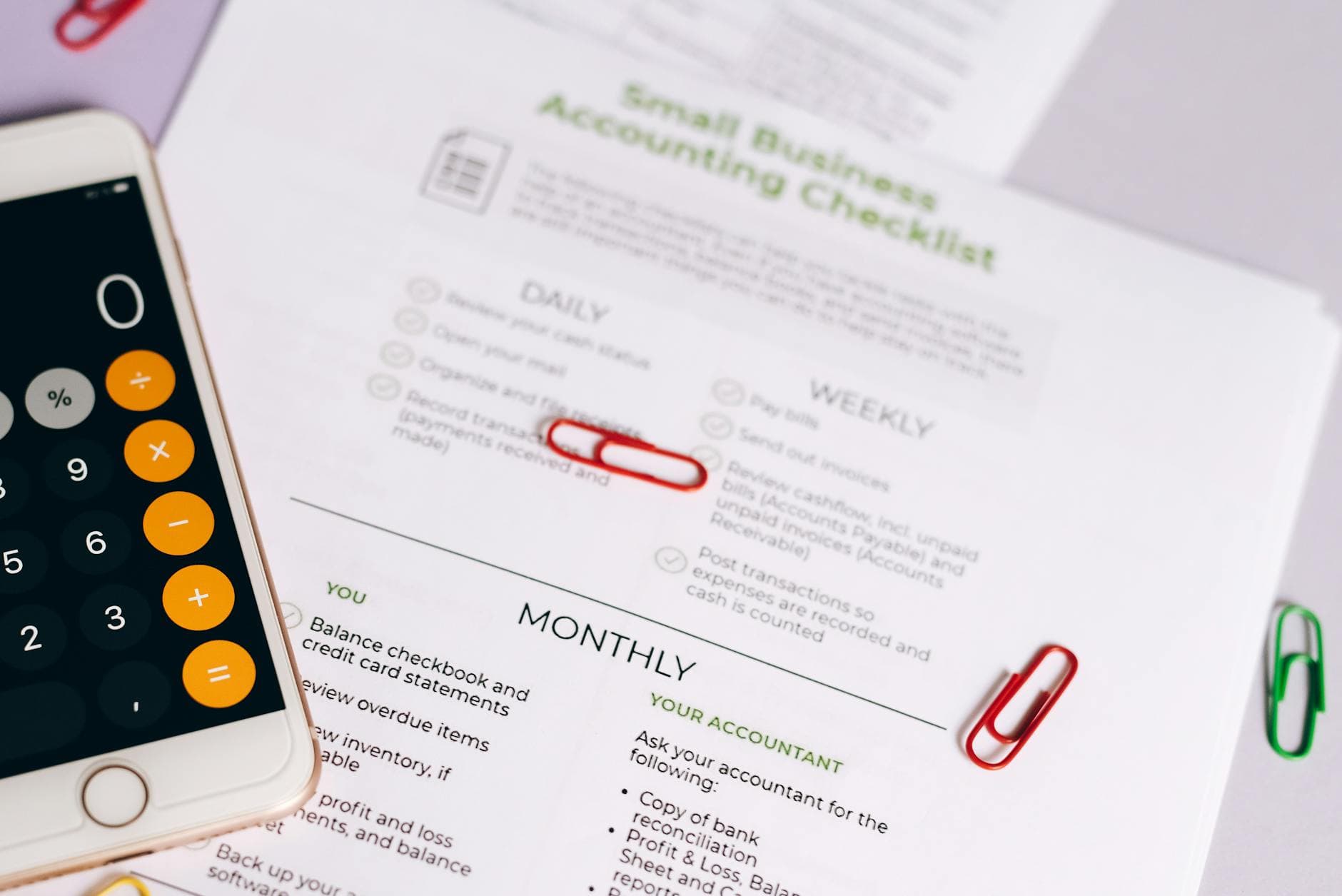
What is a Lead Qualification Checklist?
📚
Definition
A lead qualification checklist is a standardized set of criteria and questions used by sales teams to systematically evaluate whether a prospect has the budget, authority, need, and timeline (BANT) to become a paying customer, ensuring sales efforts focus only on high-potential opportunities.
Unlike gut-feel qualification, a checklist provides objective, repeatable evaluation. It's the operational bridge between marketing-generated leads and sales-closed deals. When we implemented our first structured checklist at BizAI, we saw qualification accuracy jump from 52% to 89% within 90 days, directly increasing our sales team's close rate by 34%.
Why a Lead Qualification Checklist Matters for Agencies
Agency sales cycles are notoriously complex with multiple stakeholders, custom solutions, and longer decision timelines. According to a 2025 Gartner survey, B2B service providers without structured qualification waste an average of 47% of sales resources on unproductive pursuits.
Three specific benefits for agencies:
- Eliminates Resource Drain: Stops your best talent from building custom proposals for prospects who can't or won't buy. Every hour spent on an unqualified lead is an hour not spent closing a real deal.
- Accelerates Sales Velocity: Qualified leads move through your pipeline 2.3x faster according to Salesforce's 2024 State of Sales report. Clear criteria mean fewer follow-up calls to gather basic information.
- Improves Forecasting Accuracy: When you qualify consistently, your pipeline metrics become reliable. You'll predict monthly revenue within 5-10% variance rather than the 30-40% swings most agencies experience.
This checklist approach naturally complements more advanced systems like AI Lead Qualification for Agencies, which can automate initial scoring.
The Complete Agency Lead Qualification Checklist
Here's the actionable framework we use and recommend. Treat this as your master template—customize specific questions for your agency's services.
Section 1: Basic Contact & Company Profile (Gatekeeper Questions)
- Company Name & Industry: Does this prospect operate in a vertical we serve successfully?
- Contact Role & Title: Is this person a decision-maker, influencer, or end-user? (Hint: You need the economic buyer).
- Company Size (Revenue/Employees): Do they fit our ideal customer profile (ICP)?
- Source of Lead: How did they find us? (Indicates intent level).
💡
Key Takeaway
If the lead fails 2+ items in this section, they're likely a poor fit. Disqualify early to save time.
Section 2: Need & Problem Identification (The "Why Now")
- Primary Challenge: Can they articulate their core problem in their own words?
- Current Solution: What are they doing now? (If "nothing," probe why they're looking now).
- Consequences of Inaction: What happens if they don't solve this? (Quantify pain).
- Desired Outcome: What does success look like? (Get specific metrics).
This section aligns with developing effective Lead Qualification Questions that uncover real pain, not just surface-level interest.
Section 3: Authority & Decision Process (Navigating the Org Chart)
- Decision Maker Identification: Who else is involved in this decision? (Get names/titles).
- Formal Approval Process: What are the steps, and who has final sign-off?
- Budget Authority: Does this contact control the budget, or do they need approval?
- Timeline for Decision: When do they plan to decide? When does the solution need to be live?
Section 4: Budget & Investment (The Financial Reality Check)
- Allocated Budget: Have they set aside funds for this project? (If not, it's a wish, not a lead).
- Budget Range: Is their expected investment aligned with our pricing?
- ROI Expectations: What return do they need to justify this spend?
- Funding Source: Is this from operational budget, new initiative funding, etc.?
This is the core of the BANT framework explored in depth in our guide to BANT Lead Qualification.
Section 5: Timeline & Urgency (The Closing Catalyst)
- Decision Date: The specific date they will choose a vendor.
- Implementation Start: When does work need to begin?
- Driving Event: What's forcing the timeline? (e.g., quarter-end, event, leadership mandate).
- Consequences of Delay: What's the cost of waiting?
Section 6: Fit & Compatibility (The Long-Term View)
- Cultural Fit: Does their communication style and values match ours?
- Historical Context: Have they worked with agencies before? How did it go?
- Resource Commitment: Are they prepared to provide internal resources (time, people, access)?
- Contract Terms: Are there any deal-breakers (e.g., payment terms, contract length)?
How to Implement This Checklist: A Step-by-Step Guide
A checklist is useless unless operationalized. Here's how to embed it in your workflow:
- Customize the Template: Adapt the sections above to your specific agency services. For a web design agency, "Desired Outcome" might be "Increase conversion rate by X%." For an SEO agency, it might be "Achieve top 3 rankings for Y keywords."
- Train Your Team: Conduct role-playing sessions. Use real lost deal post-mortems to show how the checklist would have revealed red flags earlier.
- Integrate into Your CRM: Create a qualification scorecard in your CRM (HubSpot, Salesforce, etc.). Each checklist item should be a field. We built this directly into our process at BizAI, and it reduced manual data entry by 60%.
- Set Clear Thresholds: Define what a "Qualified Lead" score is (e.g., 8/10 on budget, authority, need, and timeline sections).
- Review & Refine Quarterly: Analyze which checklist items most accurately predict closed-won deals. Double down on those.
For agencies dealing with high lead volume, this manual process can be supercharged with a structured Lead Scoring Model.
Lead Qualification Checklist vs. Intuition
| Criteria | Checklist-Based Qualification | Gut-Feel Intuition |
|---|---|---|
| Consistency | High. Every lead evaluated against the same objective criteria. | Low. Varies wildly between reps and days. |
| Speed | Fast after adoption. Initial call framework is predefined. | Initially fast, but often leads to long, meandering discovery calls. |
| Accuracy | High (80-90% with a good checklist). Data-driven. | Moderate to Low (50-70%). Prone to optimism bias. |
| Coaching Ability | Easy. Managers can review checklist completion to guide reps. | Difficult. Hard to coach an intangible "feeling." |
| Scalability | Excellent. The foundation for automation and AI. | Poor. Relies on individual rep experience. |
The data is clear: intuition fails at scale. A Harvard Business Review study of 1,200 sales teams found that those using structured qualification checklists achieved 28% higher win rates on forecasted deals.
Best Practices for Agency Teams
- Use It Early: Apply the checklist on the first discovery call. Don't wait until proposal stage to uncover budget or authority issues.
- Disqualify with Respect: A fast "no" is better than a slow "maybe." Use checklist failures to politely disqualify and refer them to resources if appropriate.
- Quantify Everything: Turn "pain" into dollars. "Frustrated with your website" becomes "Our current site costs us an estimated $15k/month in lost leads."
- Collaborate with Marketing: Share the checklist with marketing. It helps them create content that attracts better-qualified leads in the first place.
- Leverage Technology: Use tools to automate parts of the checklist. For example, at BizAI, our platform can pre-qualify leads based on website behavior and firmographic data before they ever talk to sales, which is part of a broader Lead Qualification Process.
- Keep It Alive: Revisit lost deals. Which checklist item did you miss? Add it to the template.
Common Mistakes to Avoid
- Treating the Checklist as an Interrogation: It's a conversation framework. Weave questions naturally.
- Ignoring "Soft" Fit Items: Culture misalignment is a leading cause of client churn. Don't skip Section 6.
- Making It Too Long: If your checklist takes 45 minutes to complete, it's too cumbersome. Aim for 20-25 minutes of discovery.
- Not Following Your Own Rules: The biggest mistake is having a checklist but letting "exciting" leads bypass it. Discipline is key.
- Forgetting to Document: If it's not in the CRM, it didn't happen. Complete the checklist fields for every single lead.
Frequently Asked Questions
What's the difference between a lead qualification checklist and a lead scoring model?
A checklist is a qualitative evaluation tool used during human-to-human interactions (like sales calls) to gather information. A lead scoring model is a quantitative system that assigns points to leads based on attributes and behaviors, often automated in marketing software. They work best together: the score prioritizes who to call, the checklist determines if they're truly sales-ready.
How many questions should be on a lead qualification checklist?
Aim for 15-20 core questions across all sections. More than 25 becomes unwieldy and will hurt adoption. The goal is to cover BANT (Budget, Authority, Need, Timeline) and fit comprehensively, not exhaustively. Each question should have a clear purpose in determining qualification.
Who should own the lead qualification checklist in an agency?
Ultimately, sales leadership (Sales Director or VP) owns the design and enforcement of the checklist. However, it should be created collaboratively with input from top-performing account executives, marketing (to ensure alignment with lead generation), and even client success (to highlight what makes a good long-term client).
Can I use the same checklist for all agency services (e.g., SEO, PPC, web design)?
You should have a master framework (like the one in this article) that is consistent, but you will need service-specific variations. The "Need" section for an SEO client (focused on organic visibility) will differ from a PPC client (focused on CAC and conversion rates). Create sub-templates for each major service line.
How do I handle a lead that meets budget and need but has a long timeline (6+ months)?
This is a "nurture" or "future opportunity" lead, not a sales-qualified lead (SQL). They should enter a dedicated nurturing track with periodic check-ins (quarterly) rather than your active sales pipeline. Automate educational content to keep them engaged until their timeline accelerates.
Final Thoughts on Your Lead Qualification Checklist
A lead qualification checklist isn't paperwork—it's your agency's revenue insurance policy. It protects your most valuable asset (your team's time) and ensures that energy is invested only in opportunities with a high probability of closing and becoming profitable, long-term clients.
The framework provided here is battle-tested. But the real magic happens when you stop manually scoring checklists and let AI handle the heavy lifting. At BizAI, we've built an autonomous demand engine that doesn't just suggest who to call—it qualifies, scores, and routes leads based on real-time intent data, creating a seamless handoff from first touch to closed deal.
Stop letting unqualified leads clog your pipeline. Implement this checklist today, and when you're ready to qualify leads at scale without the manual grind, see how BizAI automates it all.
About the Author
the author is the CEO & Founder of BizAI. He has scaled multiple agency sales teams from scratch to seven figures, and now builds the autonomous AI systems that eliminate the manual grind of lead qualification and prospecting.